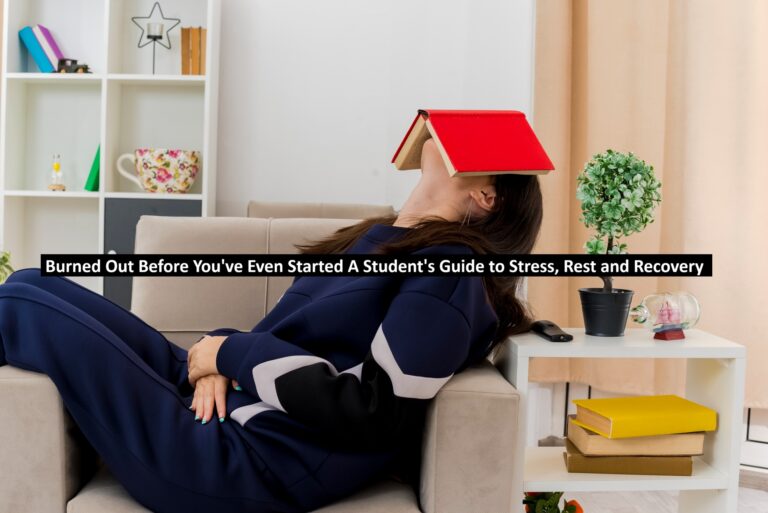
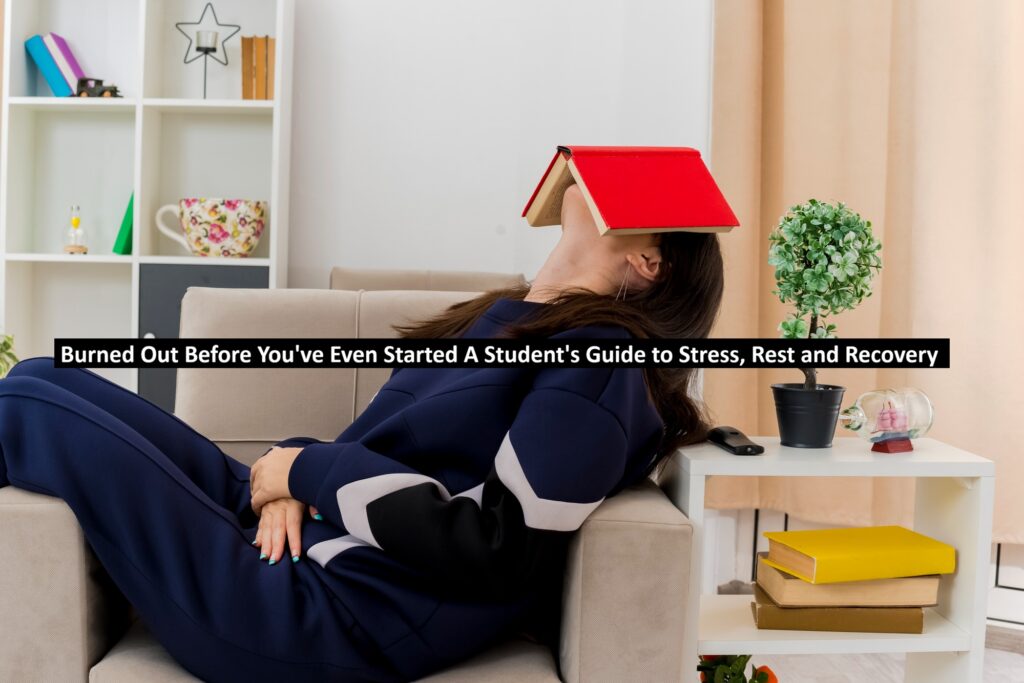
You’ve got three assignments due, a part-time job, a group project nobody else is working on, and a careers fair next week where you’re supposed to “network”. Everyone says these are the best years of your life. So why do you feel completely drained?
Burnout isn’t something that only happens to people twenty years into a career. Students and new graduates can get there too, and they often don’t recognise it because they think they’re “just tired” or “not trying hard enough”.
Let’s look at what burnout really is, how to spot it early, and what actually helps you recover.
What is burnout, really?
Christina Maslach and Michael Leiter, two of the leading researchers in this field, describe burnout as a response to long-term stress with three parts (Maslach & Leiter, 2016, World Psychiatry):
- Exhaustion: feeling physically and emotionally drained.
- Cynicism or detachment: pulling away and caring less about the things that used to matter.
- Reduced effectiveness: feeling that nothing you do is good enough or makes a difference.
Their research also makes an important point: burnout grows out of a mismatch between people and their environment, such as too much workload, too little control, too little reward, unfairness or a lack of support. It isn’t a sign that you’re weak.
Punch line: Burnout is not a character flaw. It’s a signal that the demands have outrun the resources.
Read: How Universities can Better Prepare Students for the Software Development Industry
Why students burn out too
University and the first years of work often stack up exactly the pressures that research links to burnout:
- Heavy, unpredictable workload: deadlines that pile up in the same week.
- Low control: timetables, grades and job offers decided by other people.
- Money stress: fees, rent and part-time jobs on top of study.
- Constant comparison: classmates’ internships and offers all over social media.
- Always-on culture: group chats and emails at midnight.
On top of that, many students are building their future careers at the same time, polishing CVs, applying for placements and preparing for interviews. If you’re working on that side of things, Good Professions has a helpful guide on how to build a strong resume and LinkedIn profile as a student. Just remember that your energy is part of your career toolkit too.
Warning signs to take seriously
Watch for these, especially if several show up together and last for weeks:
- You wake up tired even after a full night’s sleep.
- Tasks that used to take an hour now take an afternoon.
- You feel numb or cynical about a course or job you once cared about.
- You’re snapping at friends or family more than usual.
- Weekends and holidays don’t refresh you.
- You keep thinking “What’s the point?”
Punch line: If rest no longer refills you, it’s time to change how you rest, not just how hard you work.
What actually helps you recover
The natural reaction to falling behind is to push harder: stay up later, skip meals, cancel plans. That might get you through one deadline, but it drains the tank even further.
Research on recovery points to a better way. Sabine Sonnentag and Charlotte Fritz identified four “recovery experiences” that help people bounce back from work stress (Sonnentag & Fritz, 2007, Journal of Occupational Health Psychology). Here’s how each one looks in student life.
1. Psychological detachment: switch off for real
Recovery needs time when your mind is genuinely off study or work. Choose a cut-off time each evening, mute the group chats, and do something that has nothing to do with deadlines.
2. Relaxation: lower the volume
Slow, low-effort activities like a walk, a long shower, prayer, gentle stretching or quiet music help your body come down from “alert mode”. Scrolling feels relaxing, but it often keeps your brain buzzing.
3. Mastery: do something absorbing
It sounds odd, but challenging activities outside your main work restore energy. Learn to cook a new dish, play a sport, pick up an instrument or start a language. Getting absorbed in something you’re improving at gives your mind a break from worry.
4. Control: choose how you spend your free time
Students often feel that every hour is dictated by someone else. Take back small choices. Plan one evening a week that is entirely yours, and protect it like an exam.
“Almost everything will work again if you unplug it for a few minutes, including you.” — Anne Lamott
Small changes that make a big difference
[IMAGE: friends laughing together outdoors or a person walking in a park]
- Break big tasks into “first steps”. Not “write the dissertation” but “write 200 words of the introduction.”
- Batch your messages. Check email and group chats at set times instead of all day.
- Protect sleep. A tired brain learns, remembers and copes less well.
- Talk to someone. A friend, mentor or your university’s student support service can help you see the situation more clearly.
- Look at the load, not just yourself. Can you drop a commitment, ask for an extension or share the group work more fairly?
When it might be more than burnout
Burnout and depression can overlap. If you’ve lost interest in almost everything, feel hopeless, notice big changes in sleep or appetite, or have thoughts of harming yourself, please reach out to a doctor, your university counselling service or a qualified mental health professional straight away. If you’re in immediate danger, contact local emergency services.
Punch line: Asking for help early is not falling behind. It’s how you stay in the race.
Final thoughts
Your career is a marathon, not a sprint, and it starts with how you treat yourself now. Learn to notice the warning signs, build real recovery into your week, and remember that rest is part of the work, not a reward for finishing it. If you’re unsure whether what you’re feeling is exhaustion or something deeper, this plain-language guide on burnout vs depression can help you tell the difference and decide on your next step.